

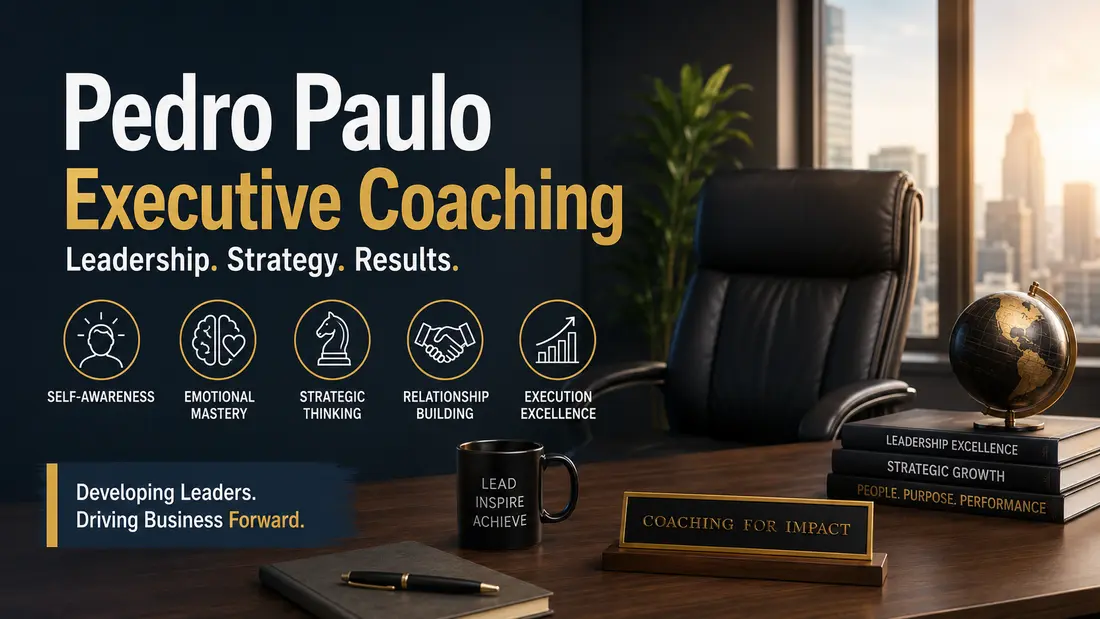
Pedro Paulo executive coaching is presented as a structured leadership development program for executives, founders, senior managers, and professionals preparing for bigger leadership roles. Rather than focusing only on motivation or career advice, the approach combines one-on-one coaching, team development, leadership assessments, strategic planning, and progress tracking.
What caught my attention while looking into the program is its focus on connecting leadership habits with real business goals. The idea is simple: better leadership should show up in the way decisions are made, teams work together, and goals get executed.
But there is more to consider than the framework alone. This guide looks at how the coaching model works, its five-pillar framework, available services, program structure, reported results, and cost. It also separates claims published by third-party sources from information that can be confirmed, so you can get a clearer picture before deciding whether the program is a good fit.
What Is Pedro Paulo Executive Coaching?
Pedro Paulo Executive Coaching is presented as a structured leadership coaching service built for people who have a lot on their plate and want a clearer way to handle leadership challenges. The program is aimed at executives, founders, senior managers, and high-potential professionals who want to improve how they lead while keeping business goals in view.
The basic idea is not simply to sit down with a coach and talk about work. The reported model connects personal leadership development with practical goals, team performance, decision-making, and measurable progress. That makes it particularly relevant for someone dealing with a promotion, rapid company growth, a demanding team, or a major business transition.
How the Coaching Model Works
The process typically starts with a look at where the leader is now. Leadership assessments, including 360-degree feedback, may be used to identify strengths, blind spots, and areas that need work. From there, the coaching process can move into specific goals and behaviors rather than vague promises to “be a better leader.”
Sessions may focus on communication, emotional control, delegation, strategic thinking, or difficult decisions. The next step is turning those conversations into action. Business-focused plans, measurable goals, and regular check-ins are reported as part of the approach.
Progress tracking also matters. Instead of relying only on how a leader feels after a few sessions, the model is described as using feedback, KPIs, and other measures to see whether changes are actually taking hold. Accountability then keeps those changes from disappearing once the coaching conversation ends.
How It Differs From Traditional Executive Coaching
There is no single format for traditional executive coaching, so the comparison below is best viewed as a general guide rather than a rule.
| Area | Traditional coaching | Pedro Paulo approach |
|---|---|---|
| Focus | Leadership development | Leadership plus business outcomes |
| Sessions | Often one-to-one | One-to-one plus team work |
| Measurement | Often qualitative | Reported use of metrics |
| Goal setting | Mainly individual | Individual plus organizational |
| Follow-up | Varies by coach | Reported progress tracking |
The biggest distinction is the reported link between the leader and the wider business. A leadership habit is not treated as useful just because it sounds good in theory. The focus is on whether it changes decisions, team behavior, execution, or other outcomes that matter at work.
Who Is Pedro Paulo?
Pedro Paulo is described across online sources as an executive coach, business consultant, and leadership strategist. Published profiles commonly connect his work with executive coaching, strategy consulting, leadership development, and support for founders and senior business leaders. Some sources also describe experience across sectors such as hospitality, food businesses, technology, healthcare, and finance.
That broad background helps explain why the coaching model is often described as a mix of leadership coaching and practical business guidance. Instead of looking at leadership in isolation, the approach is presented as connecting a leader’s behavior with decisions, teams, strategy, and business performance.
Background and Professional Experience
The available profiles describe more than a decade of experience working with executives, founders, managers, and business owners. Several articles say he has worked with Fortune 500 executives as well as leaders at startups and growing companies.
The industry coverage is also fairly broad. Hospitality and food businesses appear frequently in the published material, while other profiles mention areas such as technology, healthcare, and finance.
Credentials and Experience: What Is Publicly Reported?
This is where a little caution is useful. Online profiles do not all tell exactly the same story about Pedro Paulo’s education, certifications, or career history. For example, some articles report a Business Administration degree and advanced study in business strategy, while another profile claims ICF certification and additional coaching credentials.
Those details should therefore be treated as reported information, rather than independently confirmed facts, unless they can be verified through a primary source or official professional record. The same approach makes sense for claims about specific clients, career achievements, and coaching outcomes. Current coverage itself notes that much of the information circulating online comes from marketing-style articles rather than independently audited sources.
For readers considering a coaching program, that distinction matters. A strong profile is useful, but checking credentials, experience, references, methodology, and measurable outcomes directly is a smarter step before making a business decision.
The 5 Pillars Framework Explained
The 5 Pillars Framework is the central structure used to describe Pedro Paulo’s coaching approach. Instead of treating leadership as one skill, the model breaks it into five connected areas: self-awareness, emotional mastery, strategic thinking, relationship building, and execution excellence.
That structure makes sense when you think about what leadership actually looks like at work. A manager can have strong business knowledge but struggle with communication. A founder may have a clear vision but find it hard to delegate. An executive may make good plans but lose focus when pressure builds. The five pillars are designed to look at these areas together and turn them into practical leadership habits.
1. Self-Awareness
Good leadership starts with knowing how you operate. The self-awareness pillar focuses on helping leaders understand their strengths, weaknesses, habits, and blind spots.
Tools such as 360-degree feedback and psychometric assessments may be used to gather a wider view of a leader’s behavior. Instead of relying only on personal opinions, feedback from colleagues, managers, and team members can reveal patterns that are easy to miss.
For example, a leader might see themselves as decisive while their team sees them as too controlling. Another executive might believe they give people enough space when, in practice, they frequently step in and change decisions.
The goal is not to label these behaviors as good or bad. It is to understand them first. Once a leader can see how their behavior affects other people, they have a better starting point for making changes.
2. Emotional Mastery
Leadership rarely happens under perfect conditions. Deadlines slip, deals fall through, employees disagree, and major decisions sometimes have to be made with incomplete information.
The emotional mastery pillar focuses on emotional intelligence, stress management, and leadership under pressure. Leaders are encouraged to recognize their emotional triggers and understand how those reactions can affect their judgment.
Imagine an executive receiving bad news just before an important meeting. Reacting immediately might create a problem that could have been avoided with a few minutes of reflection. Learning to pause, understand the reaction, and choose a better response can improve both communication and decision-making.
This pillar is therefore less about suppressing emotions and more about managing them well enough to remain clear-headed when the stakes are high.
3. Strategic Thinking
Executives can easily get trapped in the daily workload. Meetings, emails, staff problems, customer complaints, and urgent decisions can leave little room for thinking about what comes next.
Strategic thinking shifts attention toward the bigger picture. This part of the framework focuses on long-term planning, scenario planning, strategic decisions, and dealing with uncertainty.
Rather than asking only, “What needs to be fixed today?” leaders are encouraged to ask questions such as:
- Where should the business be six or twelve months from now?
- What could disrupt that plan?
- Which decisions will matter most later?
- What happens if our assumptions change?
The aim is to help leaders spend less time reacting to every problem and more time preparing for what may come next.
4. Relationship Building
Even the smartest strategy can fall apart when people do not trust the person leading it.
The relationship-building pillar focuses on communication, trust, delegation, stakeholder relationships, and team dynamics. It also addresses a common leadership problem: micromanagement.
A leader who checks every small decision may think they are protecting quality. The team may experience the same behavior as a lack of trust. Learning when to step in and when to give people room can create a healthier working relationship.
Strong delegation is part of this process. Leaders need to communicate expectations clearly, give people the right level of authority, and remain available without taking over.
The same principle applies to relationships with senior stakeholders, clients, partners, and other teams. Clear communication and trust can make difficult conversations much easier to handle.
5. Execution Excellence
Ideas are useful, but leadership is ultimately judged by what happens after the meeting ends.
The execution excellence pillar focuses on turning goals into action through tools such as SMART goals, 30-60-90 day plans, accountability systems, and progress tracking.
A leader might decide to improve delegation, for example. That goal becomes more useful when it turns into a specific action plan: which responsibilities will be handed over, to whom, by when, and how progress will be reviewed.
This pillar also focuses on building repeatable leadership habits. Change rarely happens because of one good coaching session. It usually requires practice, feedback, adjustment, and follow-up.
Progress tracking can help keep that process visible. Instead of simply deciding that a leadership skill needs work, the leader can track specific behaviors and outcomes over time.
The Five Pillars at a Glance
| Pillar | Main focus | Possible outcome |
|---|---|---|
| Self-Awareness | Leadership behavior | Better self-management |
| Emotional Mastery | EQ and pressure | Better decisions |
| Strategic Thinking | Vision and planning | Stronger strategy |
| Relationship Building | Trust and communication | Better teams |
| Execution Excellence | Accountability | More consistent action |
Taken together, the five pillars create a simple path from understanding yourself to managing pressure, thinking strategically, working better with people, and turning plans into action. That connection is what gives the framework its practical appeal for executives and business leaders.
Pedro Paulo Executive Coaching Services
The services associated with pedro paulo executive coaching cover more than private conversations between a leader and a coach. The reported offering includes individual coaching, team development, programs for emerging leaders, and workshops for organizations going through major change. The common thread is practical leadership development, with attention given to both individual behavior and business goals.
One-on-One Executive Coaching
One-on-one coaching is designed for people carrying a high level of responsibility, including C-suite executives, senior managers, and founders. Sessions can focus on the challenges that come with leading people, making difficult decisions, communicating clearly, and thinking beyond immediate problems.
For a founder, that might mean learning to delegate instead of trying to handle every decision personally. For a senior executive, the focus could be strategic leadership, stakeholder communication, or preparing for a larger role.
The value of this format is its personal nature. Conversations can center on the leader’s actual situation rather than a generic leadership lesson.
Team Performance Coaching
Leadership does not happen in isolation, which is where team coaching comes in. This service is described as helping leadership teams improve alignment, collaboration, accountability, and trust.
A coaching engagement may help a team agree on shared priorities, clarify responsibilities, improve communication, and create better follow-through. It can also give leadership teams a structured space to address problems that are difficult to discuss during normal business meetings.
For companies where senior leaders are pulling in different directions, this type of work can be especially useful.
Emerging Leaders Program
Moving from individual contributor to manager can be a surprisingly awkward transition. Suddenly, technical expertise is no longer enough. The person also has to delegate, give feedback, handle conflict, communicate expectations, and motivate others.
The reported emerging leaders offering is aimed at newly promoted managers and high-potential employees preparing for greater responsibility. The focus may include leadership communication, delegation, decision-making, confidence, and adapting to a new role.
This type of program can also support organizations that want to prepare their next generation of managers rather than waiting until someone is already struggling in a leadership position.
Change Management and Strategic Workshops
Organizations going through mergers, restructuring, rapid scaling, or leadership transitions often face problems that cannot be solved through individual coaching alone.
Strategic workshops are described as helping teams create alignment around major changes, clarify priorities, and maintain focus while the organization is in motion. These sessions can bring leaders together around questions such as what needs to change, who owns each part of the plan, and how progress will be measured.
The exact services, formats, and current program options should be confirmed directly with Pedro Paulo before making a decision, since third-party descriptions may not reflect the latest offering.
How the Pedro Paulo Coaching Process Works
The reported Pedro Paulo coaching process follows a fairly clear path. It starts by understanding where a leader is today, moves into specific goals and coaching conversations, and then turns those conversations into actions that can be tracked over time.
Think of it less like a single breakthrough conversation and more like a cycle: assess → set goals → coach → apply → measure → adjust. That structure can make leadership development easier to follow because there is a clear connection between what happens during coaching and what happens back at work.
Step 1: Assessment and Diagnosis
The first stage is about getting a realistic picture of the leader’s current position. Leadership assessments and 360-degree feedback may be used to collect information about strengths, weaknesses, leadership behavior, and areas that need attention.
The coach can also look at the leader’s goals and current challenges. Is the issue delegation? Communication? A difficult team? A new executive role? Rapid company growth? Identifying the real problem early helps keep later coaching sessions focused.
Step 2: Goal Setting
Once the starting point is clear, the next step is deciding what needs to change.
The useful part here is connecting personal leadership goals with business goals. Rather than setting a broad target such as “become a better leader,” the process can turn that into something more specific.
For example, a founder may want to delegate more effectively so they can spend more time on growth. A department head may want to improve communication so their team can make decisions without constant approval.
This connection gives the coaching work a practical purpose.
Step 3: Coaching Sessions
Regular coaching sessions provide space to work through real leadership situations. Conversations may involve reflection, decision-making, role-play, difficult workplace scenarios, and action planning.
Instead of discussing leadership only in theory, a leader can bring an actual problem to the session. Perhaps a team member is underperforming, a major decision needs to be made, or two senior employees are in conflict.
The coach can help the leader look at the situation from different angles, question assumptions, and decide what to do next.
Step 4: Implementation and Accountability
This is where ideas have to survive outside the coaching room.
The reported approach can include micro-practices, action plans, KPIs, follow-up, and progress reviews. A large leadership goal is broken into smaller actions that can be practiced in everyday work.
For example, improving delegation might involve handing over a specific responsibility, setting clearer expectations, and reviewing the outcome rather than taking the task back.
Regular follow-up creates accountability and gives the leader a chance to adjust when something is not working.
Step 5: Measuring Progress
The final stage is about checking whether the work is actually producing change.
Possible measures include 360-degree feedback, team feedback, business KPIs, engagement, retention, and changes in leadership behavior.
The point is not to reduce leadership to a spreadsheet. Numbers simply provide another way to see whether progress is happening. When feedback and business results are reviewed together, leaders can get a clearer picture of what has changed and where more work may be needed.
The process in simple terms:
Assessment → Goals → Coaching → Action → Accountability → Measurement → Adjustment
Pedro Paulo Executive Coaching Program Tiers
The reported program structure is divided into three levels: Basic, Advanced, and Platinum. The idea is straightforward: newer leaders need a different level of support than an experienced executive dealing with company-wide change.
Third-party coverage commonly describes the tiers as roughly 6, 12, and 18+ months. These should be treated as reported program structures rather than guaranteed current packages, since program details can change and should be confirmed directly with the provider.
Basic Program
Reported duration: Around 6 months
The Basic tier is described as an entry point for emerging leaders, new managers, and high-potential professionals. The focus is on building a solid leadership foundation, with areas such as communication, delegation, goal setting, and confidence.
For someone who has recently moved from being an individual contributor to managing a team, this stage can address the practical problems that often come with that transition.
Advanced Program
Reported duration: Around 12 months
The Advanced tier is aimed at senior managers, VPs, department heads, and established executives. The work moves beyond basic management skills toward strategic thinking, broader influence, complex decisions, and leadership across teams.
The longer timeline allows more room to work on leadership habits while applying them to real business situations.
Platinum Program
Reported duration: 18+ months
The Platinum tier is described as the deepest level of support, aimed at founders, C-suite leaders, and executives managing major organizational change.
Reported areas of focus include large-scale change, long-term strategy, stakeholder management, and ongoing leadership development. Some coverage also describes more frequent sessions and continued advisory support at this level.
| Program | Duration | Typical client | Main focus | Level of support |
|---|---|---|---|---|
| Basic | Around 6 months | Emerging leaders, new managers | Core leadership skills | Foundational |
| Advanced | Around 12 months | Senior managers, VPs, executives | Strategy and broader leadership | Deeper, ongoing support |
| Platinum | 18+ months | Founders, C-suite leaders | Major change and long-term strategy | Highest reported level |
The key point is that these tiers are designed around leadership responsibility and development needs, rather than simply offering the same coaching package to everyone. For anyone considering the program, the current duration, session frequency, inclusions, and pricing should be confirmed before enrolling.
What Results Does Pedro Paulo Executive Coaching Report?
Numbers can make an executive coaching program look very attractive, but they also need context. Several online articles about Pedro Paulo Executive Coaching cite strong performance figures, including an estimated 788% coaching ROI, a 65% promotion rate within 18 months, and a 30% increase in team productivity.
Those numbers are worth knowing, but they should be read as reported figures rather than guaranteed outcomes. Coaching results can vary widely depending on the leader, company, goals, starting point, and length of the engagement.
Reported Performance Metrics
The figures commonly cited across published sources include:
| Reported metric | Figure cited in sources |
|---|---|
| Coaching ROI | Around 788% |
| Client promotions | Around 65% within 18 months |
| Team productivity | Around 30% increase |
| Team trust | 12% to 45% |
| Better decisions under pressure | Around 80% of participants |
| Communication ratings | Around 40% improvement |
Some published case examples also describe individual business outcomes, such as stronger user acquisition for a startup, higher productivity within a restaurant team, and faster completion of a major merger.
At first glance, these results sound impressive. The more useful question, though, is how those numbers were produced.
How Reliable Are These Numbers?
The figures appear mainly in third-party articles discussing the coaching program and its reported outcomes. That gives readers a useful starting point, but it does not automatically make the numbers independently verified.
For example, it is worth asking whether the reported 788% ROI comes from a defined calculation that includes the full cost of coaching and a measured financial return. The same question applies to claims about promotions, productivity, trust, and communication.
A strong performance claim would ideally explain:
- Where the data came from
- How participants were selected
- How each metric was measured
- Whether results were compared with a control group
- How long the results were tracked
- Whether an independent organization reviewed the findings
- Whether the figures represent all clients or selected examples
There is also an important difference between a client reporting better leadership skills and an independently measured business result. Both can be useful, but they answer different questions.
Based on the publicly available material reviewed for this article, the reported figures should therefore be treated with healthy caution. They may reflect real client experiences, but readers should not assume that every participant will achieve the same results.
For a business considering an expensive coaching engagement, asking for the underlying methodology, recent case studies, and clear measurement criteria is a sensible step. Good coaching should not need impressive numbers alone to make its case. The evidence behind those numbers matters just as much.
Pedro Paulo Executive Coaching Cost
Cost is one of the first things most people want to know before considering an executive coaching program. In the case of Pedro Paulo Executive Coaching, however, there does not appear to be a reliable public fixed price for the reported program tiers. That means it would be a mistake to quote a specific figure without confirmation from the provider.
The final cost may depend on the type of coaching required, the leader’s position, the size of the engagement, and how much support is needed.
How Much Does Pedro Paulo Executive Coaching Cost?
Publicly available sources reviewed for this article do not provide a dependable fixed price for the Basic, Advanced, or Platinum programs. Pricing may therefore be customized according to the client and scope of work.
If you are searching for Pedro Paulo executive coaching cost or Pedro Paulo executive coaching price, the safest approach is to request a current proposal directly rather than relying on figures published elsewhere.
What Can Affect Executive Coaching Cost?
Several factors can change the total investment:
- Program length: A six-month engagement will generally have a different cost from a longer program.
- Executive seniority: Coaching for a founder or C-suite leader may require a different level of involvement.
- Individual vs team coaching: One-to-one coaching and leadership team programs have different needs.
- Number of participants: Larger team engagements can change the scope and pricing.
- Assessment requirements: 360-degree feedback and other assessments may be included or priced separately.
- Workshop requirements: Strategic workshops can add time and preparation.
- Ongoing support: Additional follow-up, progress reviews, or advisory access may affect the total fee.
Questions to Ask Before Paying for Coaching
Before signing an agreement, ask:
- What is included?
- How long is the program?
- How often are sessions held?
- Who conducts the sessions?
- What assessments are used?
- How is progress measured?
- What business KPIs are tracked?
- Can references or case studies be provided?
- What happens if the coach-client fit is poor?
- Is pricing fixed or customized?
Getting clear answers to these questions makes it much easier to compare the program with other executive coaching options and judge whether the investment makes sense for your specific goals.
Who Can Benefit From Pedro Paulo Executive Coaching?
Executive coaching tends to be most useful when a person’s responsibilities grow faster than their old way of working. The reported Pedro Paulo approach is aimed at several types of leaders, from C-suite executives and founders to senior managers and professionals stepping into leadership for the first time.
C-Suite Executives
For C-suite leaders, everyday decisions can carry serious consequences. Coaching may provide a private space to work through high-stakes decisions, board communication, organizational change, and leadership team dynamics.
The focus can shift from managing individual tasks to thinking about the wider organization, handling competing priorities, and communicating a clear direction.
Founders and Entrepreneurs
Founders often start by doing everything themselves. That can work for a small company, but it becomes a problem as the business grows.
Coaching can help address scaling, delegation, founder bottlenecks, and strategic planning. A founder may need to stop being the person who solves every problem and become the person who builds a team capable of solving problems without constant involvement.
Senior Managers and VPs
As managers move into larger roles, their responsibilities often extend across teams and departments. They may need to influence people they do not directly manage while making decisions that affect a much larger part of the business.
Coaching can focus on cross-functional leadership, executive presence, strategic responsibility, communication, and managing larger teams.
Emerging Leaders
First-time managers face a very different challenge. Being good at an individual job does not automatically prepare someone to manage other people.
For emerging leaders, coaching may focus on delegation, communication, confidence, feedback, and team management. The goal is to help them make the shift from doing the work themselves to getting results through other people.
Overall, the strongest fit is likely to be someone who is facing a real leadership challenge and is willing to examine their own habits, accept feedback, and put new approaches into practice.
Pedro Paulo Executive Coaching vs Traditional Leadership Training
Executive coaching and leadership training can both help people become better leaders, but they work in different ways. The main difference comes down to personalization and application.
Leadership training usually teaches a group of people the same concepts, tools, or skills. Executive coaching tends to start with the individual and their specific situation. For someone dealing with a difficult team, a new executive role, or a major business decision, that personal focus can make the experience feel much more relevant.
| Factor | Executive coaching | Leadership training |
|---|---|---|
| Personalization | High | Usually moderate |
| Format | Individual or small group | Often group-based |
| Main goal | Behavior and leadership growth | Knowledge and skills |
| Accountability | Ongoing | Often limited |
| Duration | Usually months | Often shorter |
| Business context | Highly personalized | Usually broader |
Another difference is what happens after the learning session. A training course might teach a manager how to delegate, for example. Coaching can take that same skill and work through how the manager can use it with their actual team, then revisit what happened later.
Coaching vs Consulting
Coaching and consulting are also easy to mix up.
Coaching generally helps leaders examine their thinking, behavior, decisions, and habits so they can find better ways to handle situations themselves.
Consulting usually takes a more direct approach. A consultant studies a business problem and provides expert recommendations, plans, or solutions.
The Pedro Paulo model is often described as sitting somewhere between these two approaches. It combines leadership coaching with strategic and business-focused guidance. That can be useful for executives who do not want leadership development kept separate from the challenges they are dealing with inside the business.
The right choice ultimately depends on the problem. If you need a specific skill taught to a group, training may make more sense. If you need personalized support around leadership behavior and real business decisions, coaching may be the better fit.
Is Pedro Paulo Executive Coaching Worth It?
Whether Pedro Paulo Executive Coaching is worth the investment depends on what you want from a coaching program. If you are looking for structured support around leadership, strategy, decision-making, and team performance, the reported model has several features worth considering. But it is not automatically the right choice for every leader or organization.
Potential Advantages
One of the main strengths is the structured framework. The five-pillar model gives the coaching process a clear direction instead of leaving every session open-ended.
The reported focus on personalized coaching can also be useful because leadership problems rarely look the same from one person to another. Connecting individual goals with business priorities adds another practical layer.
Other potential benefits include progress measurement, longer-term support, and the combination of leadership development with strategic thinking. For an executive dealing with a major transition, having time to work through an issue, test new habits, and review progress can be more useful than a one-day workshop.
Potential Limitations
There are also some reasons to approach the decision carefully.
Public pricing is unclear, so potential clients may need to request a customized quote. Several performance figures published online are also reported claims rather than results that have been independently verified.
Results can vary from one client to another. A highly experienced executive with a clear goal may get something very different from a first-time manager. Longer programs also require a meaningful investment of both time and money.
There is another limitation worth remembering: coaching focuses heavily on the leader. It cannot, by itself, fix a poor company structure, unrealistic workloads, weak systems, or wider organizational problems.
Who May Not Need Executive Coaching?
Executive coaching may not be the best option for someone who simply wants basic management training or a quick motivational session. It may also be a poor fit for a leader who is unwilling to receive honest feedback or put new ideas into practice.
Organizations without clear development goals or a willingness to track outcomes may also struggle to get full value from a structured coaching engagement.
In short, the program may make sense when there is a specific leadership challenge, a clear reason to improve, and a genuine willingness to do the work.
How to Evaluate an Executive Coach Before Hiring
Choosing an executive coach is a little like hiring an important member of your professional support team. A polished website and impressive promises can catch your attention, but they do not tell you whether the coach is right for your situation. A better approach is to ask practical questions before making a commitment.
Check Credentials
Start with the basics. Look at the coach’s education, professional background, coaching certifications, and experience with leaders at a similar level to yours. If a credential is important to your decision, ask for details rather than relying only on a profile or marketing page.
Ask About Coaching Methodology
Find out how the coaching actually works. Ask what happens during sessions, which frameworks are used, how goals are set, and how the coach handles a leadership problem that changes over time.
A good methodology should be easy for you to understand.
Request Relevant Case Studies
Ask for examples involving clients with challenges similar to yours. A founder scaling a company may need very different support from a newly promoted manager.
Case studies should explain the starting problem, the work carried out, and the outcome without revealing confidential client information.
Understand Measurement Methods
Ask how progress will be measured. This could include 360-degree feedback, team feedback, leadership behavior, business KPIs, or other agreed measures.
The key question is simple: How will we know this coaching is working?
Clarify Pricing and Program Terms
Before signing anything, understand the total cost, program length, session frequency, cancellation terms, additional fees, and what happens when the program ends.
Do not be afraid to ask for the full agreement in writing.
Assess Coach-Client Fit
Even a highly experienced coach may not be the right match for you. Pay attention to communication style, listening skills, challenge level, and whether you feel comfortable discussing difficult situations.
Ask How Confidentiality Works
Finally, ask exactly how private your conversations will be, especially when an employer is paying for the coaching. Find out what information, if any, will be shared with the company.
These executive coaching questions can make the selection process much clearer. Whether you are researching how to choose an executive coach, comparing leadership coaches, or carrying out an executive coach evaluation, the goal is the same: find someone whose experience, approach, expectations, and working style match your needs.
Final Verdict
Pedro Paulo Executive Coaching is presented as a structured leadership development program built around five areas: self-awareness, emotional mastery, strategic thinking, relationship building, and execution excellence. Its reported services include one-on-one executive coaching, team coaching, emerging leader programs, and strategic workshops.
The approach may suit C-suite leaders, founders, senior managers, and professionals moving into larger leadership roles, particularly those dealing with clear business or leadership challenges.
Before committing, buyers should verify the current program structure, pricing, coach credentials, session format, confidentiality terms, and how progress will be measured. Reported results also deserve a careful look. Figures such as ROI, promotion rates, and productivity gains should be treated as published claims unless their methods and data can be independently confirmed.
For anyone considering pedro paulo executive coaching, the best decision comes from comparing the program’s actual terms and evidence with your own goals, budget, and expectations.
FAQs About Pedro Paulo Executive Coaching
What is Pedro Paulo Executive Coaching?
Pedro Paulo Executive Coaching is presented as a leadership development program for executives, founders, senior managers, and high-potential professionals. The reported approach combines individual coaching, team development, leadership assessments, strategic planning, goal setting, and progress tracking. Its five-pillar framework covers personal awareness, emotional control, strategy, relationships, and execution.
Who is Pedro Paulo?
Pedro Paulo is described in published profiles as an executive coach, business consultant, and leadership strategist. Sources commonly associate his work with executive coaching, strategy, and leadership development for executives and founders. Details about his education, certifications, and career history vary between sources, so specific credentials should be confirmed through primary sources before relying on them.
What are the five pillars of Pedro Paulo Executive Coaching?
The five reported pillars are Self-Awareness, Emotional Mastery, Strategic Thinking, Relationship Building, and Execution Excellence. Together, they cover how leaders understand their behavior, manage pressure, make strategic decisions, build trust with others, and turn goals into action. The framework is intended to connect personal leadership development with practical workplace outcomes.
How long does Pedro Paulo Executive Coaching last?
Third-party sources commonly describe three reported program structures: around 6 months, around 12 months, and 18+ months. The shorter option is generally associated with emerging leaders, while longer engagements are described for senior executives and founders. These durations should not be treated as guaranteed current packages. Confirm the latest program length and terms directly before enrolling.
How much does Pedro Paulo Executive Coaching cost?
Reliable public pricing was not found in the sources reviewed for this article. The final cost may depend on factors such as program length, executive seniority, individual or team coaching, assessments, workshops, and ongoing support. Anyone researching the Pedro Paulo executive coaching cost should request a current proposal rather than relying on an unverified price published elsewhere.
Is Pedro Paulo Executive Coaching legitimate?
There are published descriptions of the coaching program, its framework, services, and reported client outcomes. However, that does not mean every performance claim has been independently verified. Some figures appearing online are presented without enough detail about their methodology or independent review. Potential clients should check credentials, references, program terms, measurement methods, and current service details before making a decision.
What results does Pedro Paulo Executive Coaching claim?
Published sources report figures including around 788% coaching ROI, a 65% promotion rate within 18 months, roughly 30% higher team productivity, and improved communication and decision-making. These should be treated as reported claims, not guaranteed results. Individual outcomes can differ based on the leader, organization, goals, starting point, and level of participation.
Who should consider executive coaching?
Executive coaching may be worth considering for C-suite executives, founders, senior managers, VPs, and high-potential professionals moving into leadership roles. It can be particularly useful when someone faces a clear challenge involving decision-making, delegation, communication, team performance, strategic planning, or organizational change.
What happens during an executive coaching session?
A session will typically involve discussion, reflection, challenge analysis, and action planning. The leader may bring a current workplace problem to the conversation, examine different ways to handle it, and agree on practical next steps. Later sessions can review what happened, identify lessons, and create accountability around the next set of actions.
Is executive coaching better than leadership training?
Neither is automatically better. Leadership training is usually designed to teach skills or knowledge to a group, while executive coaching provides more personalized support around a leader’s specific behavior and challenges. Training can work well for learning a new management skill. Coaching may be a better fit when someone needs ongoing feedback, reflection, accountability, and support applying that skill in real situations.
Read Also: Code LoveLolaBlog Explained: What It Actually Means