
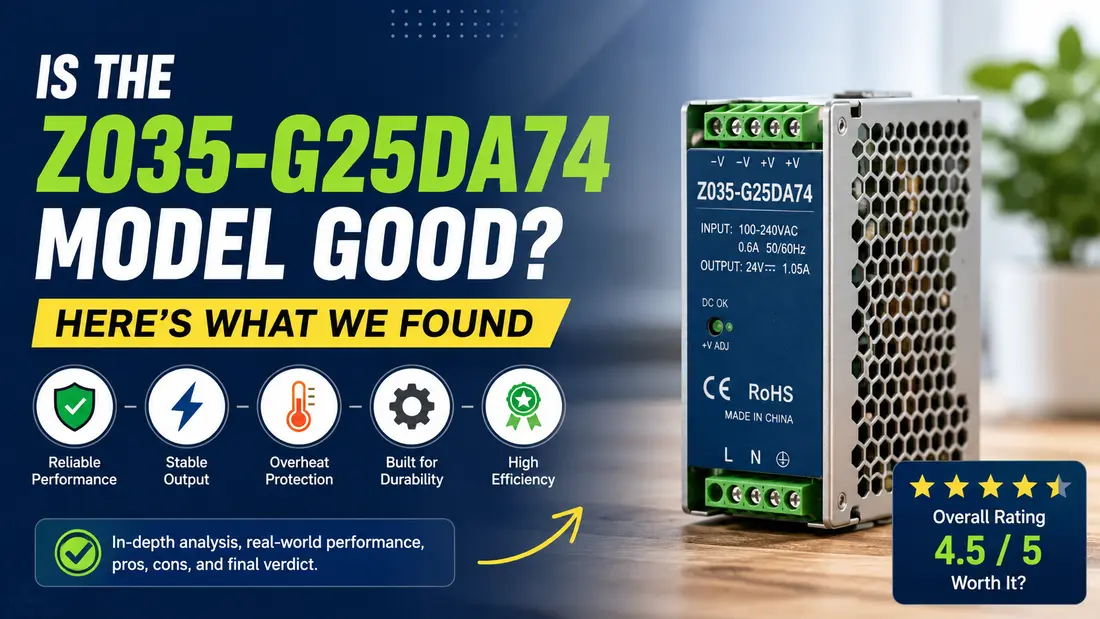
You searched “is zo35-g25da74 model good,” and every page you clicked sounded like it was describing a completely different TV. One says it has a Harman Kardon sound system and a “Crystal Quantum Matrix” display. Another calls it Samsung-inspired with recycled aluminum construction. A third just says it comes in three sizes and leaves it at that.
That’s not normal. Real product reviews might disagree on opinions, but they don’t disagree on basic facts like what the TV is made of or what sound system it has.
We dug into the ZO35-G25DA74 model to figure out what’s actually going on, and the answer matters for more than just this one search. Here’s what we found, why it happened, and how to protect yourself the next time you hit a model number that feels off.
What Is the ZO35-G25DA74 Model, Really?
The short answer: there’s no verifiable product behind this name. No major retailer listing, no manufacturer page, no brand actually claiming it as theirs.
That’s unusual for a real TV. Even budget or lesser-known TV brands show up somewhere concrete, like a listing on Amazon, Best Buy, or Walmart, or at minimum a support page from the company that makes it.
What Shows Up When You Search It
Instead of retailer listings, you get a cluster of blog-style articles all describing the “ZO35-G25DA74 Model TV” in strangely similar but conflicting terms. They all use near-identical phrasing about thin bezels and a “manageable weight for wall mounting,” then diverge wildly on the actual specs.
None of them link to a purchase page. None reference a real price. That’s the first sign something’s off, since a genuine product review almost always tells you where and how much to buy it for.
What’s Missing From Every Listing
There’s no serial number format, no support page, no warranty information, and no customer reviews from people who actually own one. A real TV brand wants you to register your product and find support easily. As one guide on genuine TV verification puts it, you can typically confirm a real Samsung TV by matching its serial number against the manufacturer’s own database and packaging.
None of that infrastructure exists for the ZO35-G25DA74. There’s nothing to register, because there’s nothing behind the name.
Why the Specs Don’t Add Up
This is where the pattern becomes obvious. Compare enough of these pages side by side, and the contradictions pile up fast.
Conflicting Details Across “Review” Sites
One article claims the TV runs “LumaVision OS 6.0” with a proprietary “Crystal Quantum Matrix” display panel and a Harman Kardon 2.1.2 sound system. Another never mentions any of that and instead just says it “handles gaming well enough for casual players” with generic bezels and a plastic frame. A third claims it launched in 2024, uses recycled aluminum, and saw “25% year-over-year” adoption growth, numbers that appear nowhere else and cite no source.
If this were a real product, these details would match. Manufacturers don’t ship three different sound systems and three different display technologies under one model number.
The Telltale Signs of AI-Generated Product Content
This pattern has a name in content circles, and it’s become common enough that entire guides exist to help people spot it. One tip that applies directly here: check whether the content appears anywhere established, or only across a scattering of unfamiliar sites repeating the same vague claims. That’s exactly what’s happening with the ZO35-G25DA74.
The writing style is also a giveaway. Phrases like “represents this evolution” and “reimagined visual experience” sound impressive but say nothing specific, which is a common trait of content generated to fill a page rather than inform a buyer.
Is the ZO35-G25DA74 Model Good? The Honest Answer
No, not because it performs poorly, but because there’s no real product to evaluate in the first place. You can’t rate picture quality, sound, or gaming performance on a TV that doesn’t appear to exist in any manufacturer’s lineup or retailer catalog.
What you’re seeing instead is a cluster of content designed to rank for an obscure search term, not to inform you about an actual purchase. The safest move is to treat any “review” of this model as unreliable and look elsewhere for a TV that has verifiable listings, real reviews, and a manufacturer standing behind it.
If you’re shopping for a budget 4K smart TV, that’s a completely reasonable thing to want. Just look for one with a model number that traces back to an actual brand, not one that only shows up in a handful of nearly identical blog posts.
How These Fake Model-Number Pages Get Created and Ranked
This isn’t an isolated case. Model-number confusion shows up across other product categories too, and it follows a predictable pattern once you know what to look for.
Why SEO Content Farms Target Obscure Codes
Random alphanumeric strings like ZO35-G25DA74 are attractive to content farms precisely because almost nobody has written about them yet. That makes them easy to rank for with minimal competition, even with thin, inaccurate content.
Similar situations show up in other tech categories, where a searched code turns out to not match any confirmed commercial product in reliable documentation. The advice in those cases is the same one we’re giving here: don’t assume specifications are accurate just because a page presents them confidently.
How They Spread Across Multiple Sites
Once one site generates a batch of “specs” for a fictional or unverifiable product, other low-effort content sites often follow with their own AI-generated variations. That’s why you see the same structural pattern (bezels, stand stability, build materials) worded slightly differently across a handful of domains you’ve never heard of.
The goal isn’t to inform you. It’s to capture clicks from a specific search phrase before anyone corrects the record.
How to Verify Any TV Model Before You Trust a Review
You don’t need to be a tech expert to catch this. A few quick checks will tell you almost everything you need to know.
Checks That Take Under 5 Minutes
Start with the basics before you trust any article’s claims.
- Search the model number alongside the word “price” or the name of a major retailer like Amazon or Best Buy
- Look for the model number on the actual manufacturer’s official website, not a third-party blog
- Check whether real customer reviews exist anywhere, with photos or verified purchase tags
- See if the TV has a findable serial number format, since real manufacturers document theirs
Red Flags That Mean Walk Away
Some signs are strong enough on their own to make you stop and reconsider.
- Multiple articles describe wildly different specs for the same exact model number
- No retailer, anywhere, sells the product or lists a price
- The writing is vague and repeats generic phrases like “reimagined experience” without concrete detail
- Listings show inconsistent details or multiple different model numbers used interchangeably, which is a known marketplace warning sign even for products that are at least partially real
What Should You Do If You Saw This Model Somewhere Specific?
If you saw the ZO35-G25DA74 mentioned in an ad, a marketplace listing, or a forum post, go back to that exact source and check it carefully rather than trusting any article about the model itself. Look at the seller’s history, whether they have a real return policy, and whether the listing photos match across multiple angles.
If it was a marketplace listing, check the seller’s other products and reviews before buying anything. A seller with no history, vague contact information, or stock photos only is a bigger red flag than the model number itself. When in doubt, search for the exact same product on a major retailer and compare, since a legitimate TV almost always shows up somewhere you can verify independently.
Conclusion / Final Thoughts
Not every search term that trends leads to a real product, and the ZO35-G25DA74 is a clear example of that. The specs contradict each other, there’s no manufacturer behind it, and the content built around it looks generated to capture clicks rather than inform buyers.
The good news is that verifying a product takes just a few minutes once you know what to check: a real retailer listing, a manufacturer support page, and reviews that actually match each other. Build that habit, and you’ll catch this pattern instantly the next time it shows up under a different model number.
Run into another suspicious model number or product code? Drop it in the comments and we’ll help you dig into it.
Read Also: Software GDTJ45 Builder Does Not Work: Here Is What Is Actually Going On