

If you’ve come across Fidzholikohixy.com and are wondering whether it’s safe to use, you’re not alone. Most people want to know one thing before entering their details or making a payment: Can I trust this website?
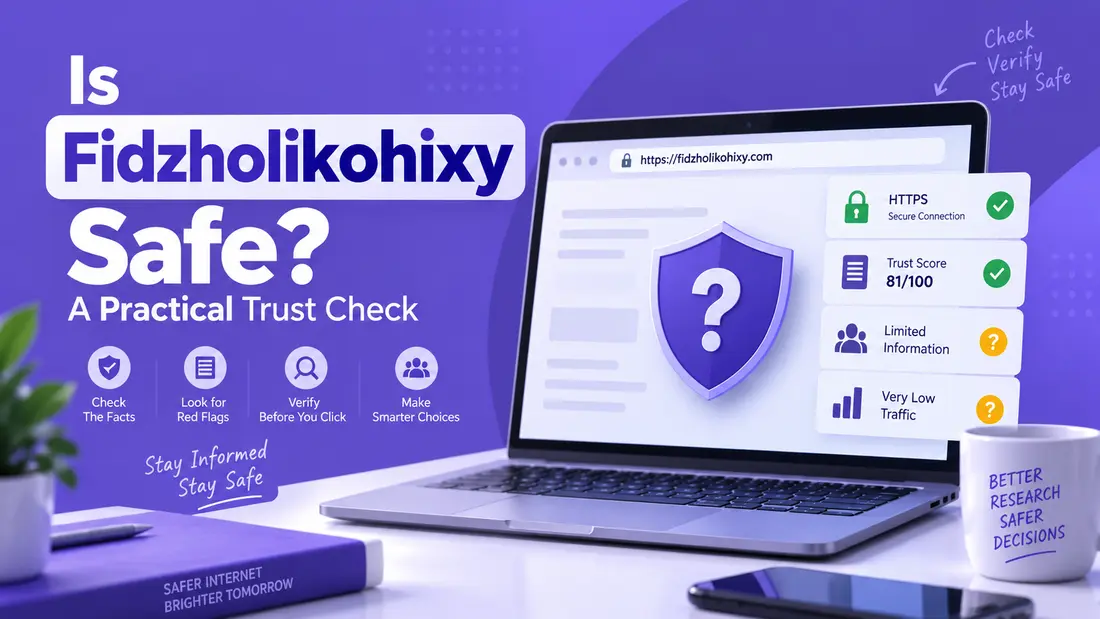
Based on the available trust data, Fidzholikohixy.com is not confirmed as a scam, but there isn’t enough history or independent information to call it fully trustworthy either. Automated checks report an 81/100 trust score, a valid HTTPS connection, and no known malware or phishing flags in the supplied scan. Those are useful signs, but they don’t tell the whole story.
The domain is also very new, has very little traffic, and does not have much publicly available information about its ownership or purpose. That doesn’t automatically mean something is wrong. A new website can be perfectly legitimate. The issue is that there’s less history available to help users judge it.
So, if you’re thinking about using Fidzholikohixy, the sensible approach is simple: browse with normal caution, verify the site before sharing sensitive information, and don’t treat an automated trust score as a guarantee.
Is Fidzholikohixy Safe to Use?
The available checks give Fidzholikohixy a few positive technical signals, but they don’t provide a complete picture of the website.
For example, an 81/100 score from ScamAdviser is a favorable result from an automated tool. A valid SSL certificate also means the connection uses HTTPS, which helps protect data while it travels between your browser and the website. DNSFilter also reported no known malware or phishing flags in the supplied check.
That said, “not confirmed as a scam” is not the same as “fully verified.”
Think of it like visiting a new shop in your neighborhood. The building looks fine, the door is secure, and nothing immediately seems unusual. But if the shop has only been open for a few days and there are no customer reviews or clear details about who runs it, you might still want to look around before handing over your money.
The same idea applies here.
Browsing the site is different from creating an account. Creating an account is different from entering payment details. And sharing sensitive personal information carries a different level of concern altogether.
The limited history of Fidzholikohixy matters because there is less independent evidence to review. There may be no known complaints, but that does not automatically mean users have had a good experience. It may simply mean there is not much information available yet.
For now, the best approach is to check the site’s details, review its policies, and look for independent feedback before taking any action that involves money or sensitive data.
Fidzholikohixy Safety Check at a Glance
Here’s a quick look at the main findings from the available trust data:
| Trust Signal | Available Finding | What It Means |
|---|---|---|
| ScamAdviser score | 81/100 | A favorable automated score, not a human audit |
| SSL certificate | Valid HTTPS | Data is encrypted during transfer |
| DNSFilter | No known malware or phishing flags in the supplied check | No flag was found in that scan |
| Domain age | Very new | Limited operating history |
| Traffic | Very low | Few public usage signals |
| User reviews | No known complaints found | No complaint history, but little independent feedback |
| Ownership | Not clearly documented | Limited public transparency |
The table gives a useful starting point, but each signal needs a little context.
A good trust score can be reassuring, yet it is still based on automated checks. HTTPS is helpful for protecting data in transit, but it does not prove that the business behind a website is genuine. Likewise, a lack of complaints may sound positive, but it means little when there are very few independent reviews to begin with.
The main thing to remember is that website safety is not decided by one score, one certificate, or one scan. It comes from looking at the full picture, including the site’s history, ownership, reputation, and how it handles user information.
What Is Fidzholikohixy.com?
One of the first things you want to know about a website is what it actually does. Is it an online store? A service platform? A tool? Or something else?
With Fidzholikohixy.com, that answer is not clearly documented in the available material. There is no widely indexed information that gives a clear picture of its services, business model, or the people behind it.
That does not automatically make the site unsafe. Plenty of new websites take time to build their online presence. But when you are trying to decide whether a site deserves your trust, a lack of basic information can make the process harder.
A few things are worth checking:
- Does the website explain what it offers? A clear description of its products or services helps users understand what they are signing up for.
- Is a business name listed? Knowing who operates the site gives users something concrete to verify.
- Are contact details easy to find? A working email address, phone number, or business address can make a difference if something goes wrong.
- Are there About Us, Privacy Policy, and Terms pages? These pages help explain who runs the site, how user data is handled, and what rules apply.
- Is the ownership clear? If you cannot easily find out who is behind a website, it becomes harder to judge its reputation or hold anyone accountable.
Think about it this way: if someone asks you to pay for a service but won’t tell you their business name, explain what they do, or provide a way to contact them, you would probably have a few questions first. A website is not much different.
A lack of public information does not prove fraud. It simply gives users fewer ways to verify who operates the site.
What Does the Fidzholikohixy Trust Score Mean?
The trust data available for Fidzholikohixy includes a few technical checks. These can help you spot obvious warning signs, but they should be treated as part of the picture rather than a final answer.
ScamAdviser Score: 81/100
The supplied sources report an 81/100 score from ScamAdviser, which is a favorable result from an automated trust-checking tool.
Tools like ScamAdviser may look at signals such as:
- Domain age
- Website traffic
- SSL certificate details
- Hosting and technical information
- Known security reports
- Other online trust signals
That can be useful when you are checking a website you have never heard of. It gives you a starting point instead of making you rely only on a quick impression.
But there is an important limit: an automated score is not the same as a business verification.
A website can have a good technical score and still have unclear ownership, poor customer service, or an offer that does not match what users expect. The score does not personally confirm that the people behind the site are trustworthy.
The date of the scan also matters. The supplied material says the scan was more than 30 days old. For a very new domain, that gap is worth keeping in mind because website details, ownership, and security status can change.
So, the 81/100 score is a positive signal, but it should not be treated as a guarantee.
DNSFilter Classification
The supplied check also reports that DNSFilter classified the site as “safe.”
In simple terms, this means the site was not flagged in that scan for known malware or phishing activity. That is useful information, especially when you are checking whether a website has been linked to common online threats.
Still, a clean scan has limits.
It does not guarantee that every page is safe forever. It does not confirm that every offer is genuine. And it does not tell you whether a business will handle your payment or personal information properly.
A website can pass a security scan and still leave important questions unanswered. That is why it is worth checking the site’s identity, policies, and reputation as well.
Valid SSL Certificate
Fidzholikohixy is also reported to have a valid SSL certificate, which means the site uses HTTPS.
You can usually spot this by looking for https:// at the start of the website address or a padlock symbol in your browser.
HTTPS helps protect data while it travels between your browser and the website. For example, it can help prevent someone on the same network from easily reading information being sent during a connection.
That is a useful security feature, but it is not proof that the website itself is legitimate.
Here is an easy way to think about it: HTTPS protects the connection, not the honesty of the person on the other end.
A scam website can also use HTTPS. So, while the certificate is a good technical sign, it should be checked alongside the site’s ownership, reputation, and business details.
Red Flags to Consider Before Using Fidzholikohixy
There is no confirmed scam finding in the supplied material, but a few details suggest that users should take their time before sharing money or sensitive information.
The Domain Is Very New
A new domain does not automatically mean a website is dangerous. Every legitimate website starts somewhere.
The concern is that a new domain usually has less history to examine. There may be fewer reviews, fewer mentions from other websites, and limited public records about how the site operates.
That makes it harder to answer questions such as:
- How long has the business been active?
- Have people used the service before?
- Has the site changed ownership?
- Are there any long-term customer experiences to review?
A new domain is not proof of a problem. It simply means there is less information available to work with.
Very Low Traffic
The supplied data also points to very low traffic.
Low traffic can happen for many harmless reasons. A website might be new, serve a small audience, or simply not have much online visibility yet.
The issue is that fewer visitors often means fewer public reviews and fewer user experiences to examine. If something goes wrong, there may also be less discussion online to help others spot the pattern.
So, low traffic is not a reason to label a site unsafe. It is another reason to look for independent information before making a decision.
No Clear Review History
This is where wording matters.
The supplied material says there were no known user complaints found. That may sound reassuring, but it does not mean the site has a strong reputation.
There is a difference between:
- No complaints found: No known negative reports appeared in the checks.
- Positive reviews from real users: People have shared actual experiences and described what happened.
- No independent review history: There is not enough outside feedback to judge the site properly.
These are three different situations.
For a new website, a lack of complaints may simply mean that very few people have discussed it publicly. It should not be treated as proof that everything is fine.
Unclear Ownership and Site Purpose
Another point worth checking is whether the website clearly explains who runs it and what it offers.
A trustworthy-looking website should make it reasonably easy to find basic details about the business, its services, and how to contact someone if help is needed.
If those details are missing or difficult to verify, users have fewer ways to judge the site before sharing information.
Before using Fidzholikohixy, look for a clear business name, contact details, service description, and basic website policies. These details do not guarantee a good experience, but they give you more information to work with.
The main takeaway is simple: no single red flag proves fraud, but several missing trust signals together are a good reason to slow down and check the site carefully.
Is It Safe to Browse, Register, or Pay on Fidzholikohixy?
The answer depends on what you plan to do on the website.
Simply visiting a site is not the same as creating an account, entering your card details, or sharing a copy of your ID. Each action involves a different level of exposure, so it makes sense to be more careful as you move from browsing to sharing personal or financial information.
Based on the supplied scan, Fidzholikohixy has no known malware flags. That is a useful sign, but it does not mean every action on the site is automatically safe. Here is how to approach each one.
| User Action | What to Consider |
|---|---|
| Browsing the site | No known malware flags in the supplied scan, but keep normal browser security enabled |
| Creating a free account | Use caution and avoid reusing an important password |
| Sharing an email address | Consider using an email address that is not tied to sensitive accounts |
| Entering payment details | Verify the business, payment process, and refund terms first |
| Sharing ID or sensitive personal data | Wait until the site’s identity and purpose are clear |
Browsing the Site
If you are only visiting Fidzholikohixy to see what it offers, the main step is to use normal browser safety habits.
Keep your browser updated, avoid downloading unknown files, and do not click on suspicious pop-ups or unexpected prompts. If the site suddenly asks you to install software or enter sensitive information just to continue browsing, take a step back.
The supplied scan did not report known malware flags, but that is not a reason to ignore basic precautions.
Creating a Free Account
Creating an account may seem harmless, especially if it does not cost anything. Still, you are giving the website some personal information, and your password may be the most important part of that process.
Use a unique password that you do not use on your email, banking, or other important accounts. If the site turns out to have a security issue, a reused password could put other accounts at risk too.
You should also avoid sharing more information than the site actually needs.
Sharing Your Email Address
An email address may seem like a small detail, but it can become a way for a website to contact you later.
If you are unsure about a new or unfamiliar site, consider using an email address that is not connected to your most sensitive accounts. Keep an eye out for unusual messages, unexpected login alerts, or emails asking you to confirm payment details.
This does not mean you need a separate email for every website. It simply helps reduce the damage if something goes wrong.
Entering Payment Details
This is where it makes sense to slow down.
Before entering your card details, check whether the website clearly explains what you are paying for, who operates the business, and what happens if you need a refund. Look for clear pricing, payment terms, and a way to contact support.
If those details are missing, unclear, or difficult to verify, it may be better to wait.
A valid HTTPS connection is useful, but it does not confirm that the business is genuine or that a payment will be handled properly.
Sharing ID or Sensitive Personal Data
Documents such as identity cards, passports, or other sensitive information should not be shared casually.
Before uploading anything, make sure you understand why the site needs it, who will receive it, and how the information will be stored. If the site’s identity and purpose are still unclear, there is little reason to rush.
The practical takeaway: Browsing, registering, paying, and sharing sensitive data are different actions. The more information or money you put at risk, the more verification you should do first.
How to Check Fidzholikohixy Before Using It
If you are still unsure about Fidzholikohixy, you do not need to guess. A few simple checks can help you build a clearer picture before deciding whether to use it.
Check the Website’s HTTPS Connection
Start with the website address.
Look for https:// at the beginning of the URL and a padlock symbol in your browser. This means the connection uses HTTPS, which helps protect data while it travels between your browser and the website.
But remember, the padlock is not a stamp of approval.
It does not confirm who owns the site, whether the business is genuine, or whether the products and services are reliable. It only tells you that the connection is encrypted.
Review the Domain Registration
Next, check how long the domain has existed.
A WHOIS lookup can show the domain’s registration date and, depending on the available records, some ownership details. For a new website, this can help you understand whether it has been around for weeks, months, or years.
Keep in mind that privacy protection may hide the owner’s personal details. That is common and does not automatically mean something is wrong.
The main thing to look at is the domain’s age and whether the available information matches what the website claims about itself.
Run More Than One Trust Check
It is also worth checking the domain through more than one security or trust service.
Some tools you can use include:
- ScamAdviser
- URLVoid
- Google Safe Browsing
Different tools look at different signals. One may focus on domain information and reputation, while another may check for known security threats.
If several tools report similar findings, that gives you more context. If their results differ, do not ignore the difference. It may simply mean that the tools are checking different things or using data collected at different times.
Search for Independent Reviews
Search the domain name along with words that match what you want to know.
For example:
fidzholikohixy.com review
fidzholikohixy scam
fidzholikohixy complaint
fidzholikohixy legit
Look for real user experiences, not just pages that repeat the same trust score or copy the same wording.
A genuine review may explain what someone bought, how the service worked, whether they received a response, or what happened when they asked for a refund. Those details are usually more useful than a simple “safe” or “scam” label.
Check the Site’s Business Details
Before trusting a website, look for basic information about the people or business behind it.
Check whether it has:
- An About Us page
- A contact email
- A business address
- A Privacy Policy
- Terms of Service
- A refund or cancellation policy
These pages do not guarantee that a site is legitimate, but they make it easier to understand how the business operates and what your options are if something goes wrong.
If the information is missing, vague, or inconsistent, that is a reason to ask more questions before sharing money or sensitive data.
Review the Payment Method
Finally, look at how the website asks you to pay.
Payment methods that offer buyer protection may give you more options if a payment dispute comes up. Sending money directly to an unfamiliar person or business can leave you with fewer ways to recover it.
Before paying, check:
- Who receives the payment
- Whether the payment page belongs to the expected business
- What the refund terms say
- Whether you receive a confirmation or receipt
- Whether the payment method offers dispute support
You do not need to assume the worst. Just make sure you understand the transaction before going ahead.
A few minutes of checking can save you from a much bigger problem later.
What Should You Do If You Already Used Fidzholikohixy?
If you have already visited Fidzholikohixy or shared information with it, there is no need to panic. The right next step depends on what you did on the website.
You Only Visited the Website
Simply visiting a website does not automatically mean your personal data was exposed. Most browsing sessions do not lead to a serious security issue.
Still, it is a good idea to:
- Keep your browser updated
- Install the latest device security updates
- Run a security scan if something unusual happened
- Avoid downloading unknown files from the site
- Clear suspicious browser notifications or permissions
If you did not enter information, download anything, or click suspicious pop-ups, your risk may be limited.
You Created an Account
If you registered on Fidzholikohixy, review the password you used.
- Use a unique password for the account
- Change the password if you used it on another website
- Turn on two-factor authentication if the option is available
- Watch for unusual emails, login alerts, or password reset messages
- Avoid clicking links in unexpected account-related emails
If the same password was used elsewhere, change it on those other accounts as well.
You Shared Payment Details
If you entered card or bank details, take a more careful approach, especially if you are unsure about the website.
- Contact your bank or card issuer if you think your details may have been exposed
- Review recent account and card statements
- Report unauthorized charges as soon as possible
- Ask the issuer whether your card should be replaced
- Follow any security steps recommended by your bank
Do not wait for a large charge before taking action. Even a small unfamiliar transaction may be worth reporting.
You Shared Sensitive Personal Information
If you shared information such as your identification number, address, phone number, or other sensitive details, contact the relevant service provider or institution for advice.
The right response depends on the type of information involved. For example, a bank may suggest different steps from a government office, mobile provider, or identity service.
Also, be careful of follow-up calls, emails, or messages that use the information you submitted. Scammers sometimes use previously shared details to make later messages appear genuine.
Final Thoughts on Fidzholikohixy Safety
The available information about Fidzholikohixy presents a mixed picture.
The supplied scans show some positive technical signals, including a valid SSL certificate, a reported 81/100 ScamAdviser score, and no known malware or phishing flags in the DNSFilter check. These points suggest that the website is not currently confirmed as an obvious scam.
At the same time, the domain appears to be very new, has limited public traffic, and does not have a strong independent review history. Its ownership and exact purpose are also not clearly documented. These gaps make it difficult to confirm how trustworthy the website is.
A clean scan or valid SSL certificate is not proof of a legitimate business. Before using Fidzholikohixy, verify its business details, policies, reviews, and payment options. Avoid sharing payment details or sensitive information until those checks provide enough confidence.
Based on the available information, Fidzholikohixy is not confirmed as a scam, but its limited history means users should take a careful approach.
Fidzholikohixy Safety FAQ
Is Fidzholikohixy a Scam?
The supplied trust data does not confirm Fidzholikohixy as a scam. However, there is not enough independent information to call it fully trustworthy either.
The website has some positive technical signals, but its new domain, low traffic, and limited public history leave questions unanswered. Users should verify the site before sharing payment details or sensitive information.
Does Fidzholikohixy Have a Good Trust Score?
The supplied information reports an 81/100 ScamAdviser score. This is a positive signal, but it is an automated score rather than a guarantee that the website is safe.
Trust scores can also change as new information becomes available. Check the score’s date and review the reasons behind it before relying on the result.
Does Fidzholikohixy Use SSL?
Yes. The supplied sources report that Fidzholikohixy has a valid SSL certificate and uses HTTPS.
This helps protect data while it travels between your browser and the website. However, HTTPS only shows that the connection is encrypted. It does not prove that the business is legitimate or that the site can be trusted.
Is Fidzholikohixy Safe for Payments?
Payment details should not be shared until the site’s ownership, purpose, refund policy, and payment terms have been verified.
A valid SSL certificate and clean technical scan are not enough to confirm that a website will handle payment information responsibly. If you decide to use the site, look for protected payment methods and avoid sending card details through email, chat, or unfamiliar forms.
How Can I Check Whether Fidzholikohixy Is Legit?
You can review several details before using the website:
- Check the domain’s registration age
- Review trust scans from more than one source
- Look for independent customer reviews
- Confirm the site’s business name and contact details
- Read the refund, privacy, and payment policies
- Check whether the payment method offers buyer protection
- Look for clear information about who operates the website
No single check can prove that a site is legitimate. A combination of consistent, verifiable information gives you a clearer picture.
What Should I Do If I Think I Shared My Details With a Scam Site?
Take action based on the information you shared:
- Contact your bank if you entered payment details
- Report any unauthorized charges quickly
- Change passwords that were reused on other websites
- Monitor your bank, email, and other important accounts
- Watch for suspicious emails, calls, or password reset requests
- Contact the relevant institution if you shared sensitive personal information